
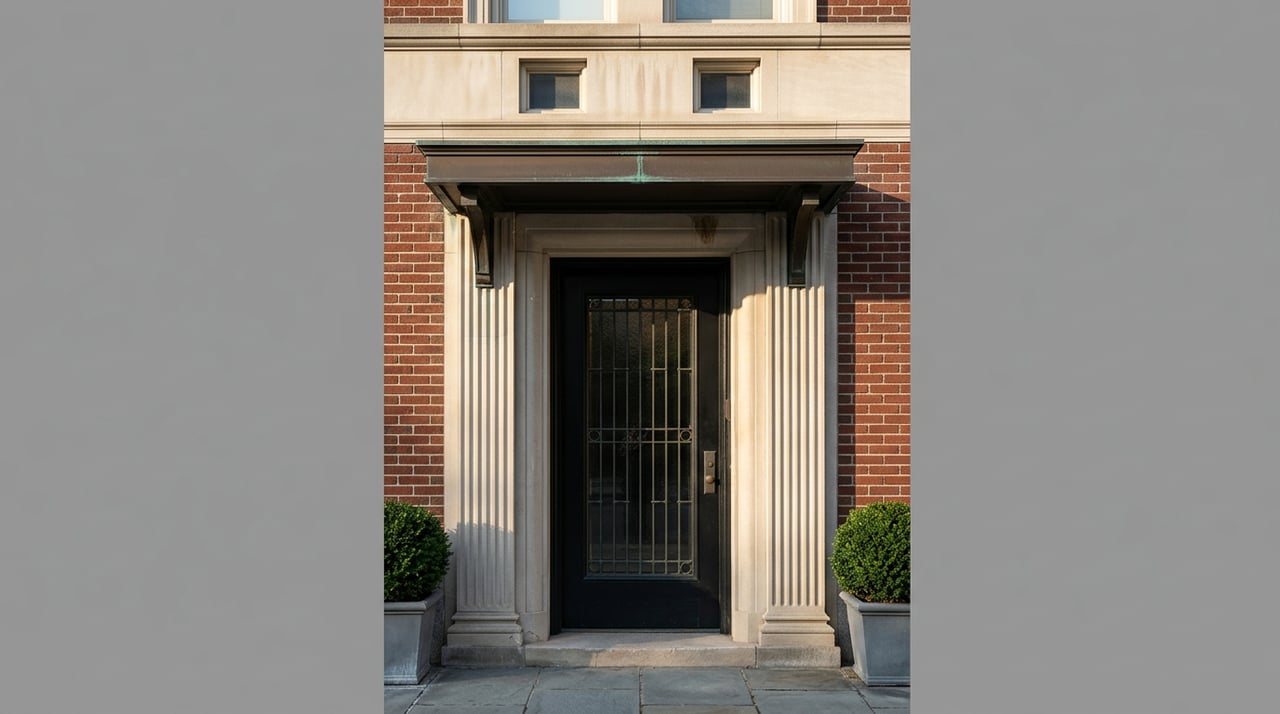
A buyer touring a pre-war building on North State Parkway does the math the way most people do: the co-op is listed $150,000 below a comparable condo two blocks over, so it must be the better deal. Then the lender says the building will only finance part of the purchase price. Then the board asks for two years of tax returns, a personal interview, and four to eight weeks to decide. By the time the buyer signs anything, the "discount" has started to look like a different kind of price entirely.
That's the pattern I see over and over on the Gold Coast, a neighborhood with one of the few real co-op markets left in Chicago, a holdover from the pre-WWII building boom that produced some of the city's most recognizable limestone facades. The Gold Coast is one of the few Chicago neighborhoods with a meaningful co-op market, a legacy of the pre-WWII building era. Co-op one-bedrooms here can start as low as $250,000, while comparable condo entry points in established buildings run $350,000 to $500,000. Co-ops here often offer exceptional value relative to comparable condos, with prices starting as low as $250K for a one-bedroom, but require board approval and have restrictions on financing and subletting. Entry-level one-bedrooms in established condo buildings start around $350K-$500K.
The gap is real. It's also not a mistake the market is making. It's compensation for exactly the friction that makes co-ops slower to buy, harder to finance, and slower to resell. If you're deciding between the two on the Gold Coast right now, the number that actually matters isn't the list price. It's the cash you'll need on day one and the weeks you'll wait before you know if you have a deal at all.
The Financing Math Nobody Runs Before Writing the Offer
Here's the part that catches buyers off guard mid-contract. Co-ops require board approval, typically limit financing to 50-70% of purchase price, and often restrict subletting, and in exchange they tend to be priced below comparable condos and often have lower monthly costs. Run a simple hypothetical: a condo buyer putting 20% down on a $700,000 unit brings $140,000 to closing. A co-op buyer on a comparably priced share, working under a 50-70% financing cap, might need $210,000 to $350,000 in cash instead, because the building's underlying financing rules limit how much any lender can cover, not the buyer's credit profile.
That's not a minor line item. It's the difference between a buyer who qualifies on paper and one who actually has the liquidity to close. In a co-op, you purchase shares and a proprietary lease rather than real property, and lenders underwrite share loans, with some not offering them at all. The pool of lenders who even do this kind of loan in Chicago is small, and the pool of buyers who can put down 30-50% in cash is smaller still.
Co-op vs. Condo, Side by Side
| Gold Coast Co-op | Gold Coast Condo | |
|---|---|---|
| Typical entry price | As low as $250K for a one-bedroom | $350K-$500K for a comparable one-bedroom |
| Financing structure | Share loan, often capped at 50-70% of price | Standard mortgage, conventional/FHA/VA options |
| Board approval | Application, financial review, often an interview | Rules-based, rarely a buyer veto |
| Typical approval window | Roughly 4-8 weeks for package and interview | Days to a couple weeks for standard closing steps |
| Monthly fee structure | Often bundles taxes and building operations | Assessment plus a separate property tax bill |
| Buyer pool on resale | Narrower, more owner-occupant focused | Broader, includes investors |
Practical Chicago guidance often suggests roughly 4 to 8 weeks for board package preparation and interviews, depending on the building and responsiveness. That's not a formality you tack onto a closing date. It's a contingency window that has to be built into the contract from the first offer, because a seller comparing your bid to a condo buyer's isn't just weighing price. They're weighing certainty.
Why the Board Still Gets a Vote
Condo boards enforce rules but rarely block a sale outright. Co-op boards are different by design. Co-op boards also hold approval rights within fair housing rules, and these factors often narrow the buyer pool and can add time to the closing process. That approval right is the mechanism behind everything else on this list. It's why financing is harder to arrange, why the timeline stretches, and why resale takes longer.
Resale time on market is usually much longer for co-ops due to the smaller pool of buyers considering co-op buildings and the perception of high monthly fees, without buyers realizing that property taxes are often part of that fee. That last point is worth sitting with. A co-op maintenance bill that looks steep next to a condo assessment often isn't an apples-to-apples comparison. Co-op shareholders typically pay a monthly maintenance fee that includes building operations and insurance, and often heat or water, with property taxes usually paid by the corporation and passed through to shareholders in that fee. Run the real total, mortgage plus fee versus mortgage plus assessment plus a separate tax bill, before assuming the condo is cheaper month to month.
The Buildings Where This Plays Out
This isn't an abstract debate. It shows up building by building, and the terms vary more than most buyers expect. At 1448 N Lake Shore Drive, a French Gothic co-op built in 1927, the building's stated minimum down payment is 50%, meaning a buyer on a $600,000 unit needs $300,000 in cash before a lender is even in the conversation. A few blocks away, the Andrew Rebori-designed co-op at 40 W Schiller, built in 1923 around a shared courtyard, allows up to 70% financing, the better end of the range but still well above what a condo purchase would require. And 1120 N Lake Shore Drive, one of the pre-war co-ops that helped establish the Gold Coast's Lake Shore Drive corridor, sits among a stretch of buildings largely designed by two firms, Marshall and Fox and Robert Seeley DeGolyer, whose work also produced The Drake Hotel and the Blackstone Hotel. The architectural pedigree is part of what makes these buildings desirable. It has nothing to do with why the financing terms differ from one address to the next, and that's exactly the point: you have to ask building by building, not neighborhood by neighborhood.
If a renovation is part of your plan, add another layer. The limestone mansions along Astor Street are a National Historic Landmark, and that designation extends to plenty of the district's buildings, co-op and condo alike. Many Gold Coast buildings are in historic districts or are designated landmarks, so exterior alterations, windows, and some interior work can be subject to review by local commissions and building-level rules, which means additional approval steps and longer renovation timelines with a focus on preservation. Budget the review process into your renovation calendar the same way you budget the board's timeline into your closing calendar.
Before You Write an Offer on a Gold Coast Co-op
- Get pre-qualified with a lender who already closes Chicago co-op share loans, not one who's only done conventional condo mortgages. The list of active players is short and worth confirming before you fall for a listing.
- Ask the listing agent for the building's actual package-to-interview timeline, not just what the bylaws say on paper. Buildings vary widely in how fast their boards move.
- Request two to three years of financial statements, the reserve study, and any recent or pending special assessment history before you write the offer, not after.
- Structure your contract's approval contingency around the real timeline, typically four to eight weeks, so you're not scrambling to extend a closing date the seller didn't expect to move.
- If renovation is part of the plan, confirm the building's landmark or historic-district status and ask about the commission review process before you price out a kitchen.
When the Discount Actually Wins
None of this means the co-op is the wrong move. It means the discount is priced for a specific kind of buyer, someone with cash reserves well beyond the minimum, no urgent need to sell within a year or two, and patience for a slower, more paperwork-heavy path to the closing table. For that buyer, the lower entry price and the bundled tax structure can be a genuine advantage. Condos usually attract a wider audience, including investors, and are typically easier to finance and resell, especially in amenity-rich towers, which is exactly the flexibility a co-op buyer is trading away for a lower sticker price and a quieter, more owner-occupied building.
As of early August 2026, the broader Gold Coast condo market shows 67 active listings at a median list price of $585,000. There are currently 67 condos for sale in Gold Coast at a median listing price of $585K, based on information submitted to the MLS as of August 2, 2026. Most homes for sale in Gold Coast stay on the market for 55 days and receive 2 offers. In a market moving that fast on the condo side, a co-op buyer who hasn't lined up share-loan financing and a realistic board timeline in advance is negotiating from a weaker position before the offer is even written.
A Few Questions Worth Settling Early
Can I use an FHA or VA loan for a Gold Coast co-op? Generally no. Co-ops do not meet qualifications for FHA and VA loans, so if you're relying on either program, a condo is the more realistic path.
Do co-op fees really cover my property taxes? Usually, yes. Property taxes are typically paid by the corporation and passed through to shareholders in the maintenance fee, which is why comparing a co-op's monthly fee to a condo's assessment alone understates the real cost difference.
How much longer does a co-op closing actually take? Plan for it to run longer than a condo transaction. Delays most often stem from board processes or lender reviews, especially with co-ops, so build the extra weeks into your moving timeline rather than treating them as a worst case.
The Gold Coast will keep offering both paths, a fast-moving condo market and a smaller, slower co-op stock with real architectural pedigree and real savings for the right buyer. The mistake isn't choosing one over the other. It's choosing without pricing in the friction that made the discount possible in the first place.
If you're weighing a specific building, whether it's a share loan at 1120 N Lake Shore Drive or a standard mortgage in a newer tower off Michigan Avenue, Amanda Stapleton can walk through the board package, the financing math, and the realistic timeline before you write an offer. Book a Market Strategy Call and get the numbers straight first.
