
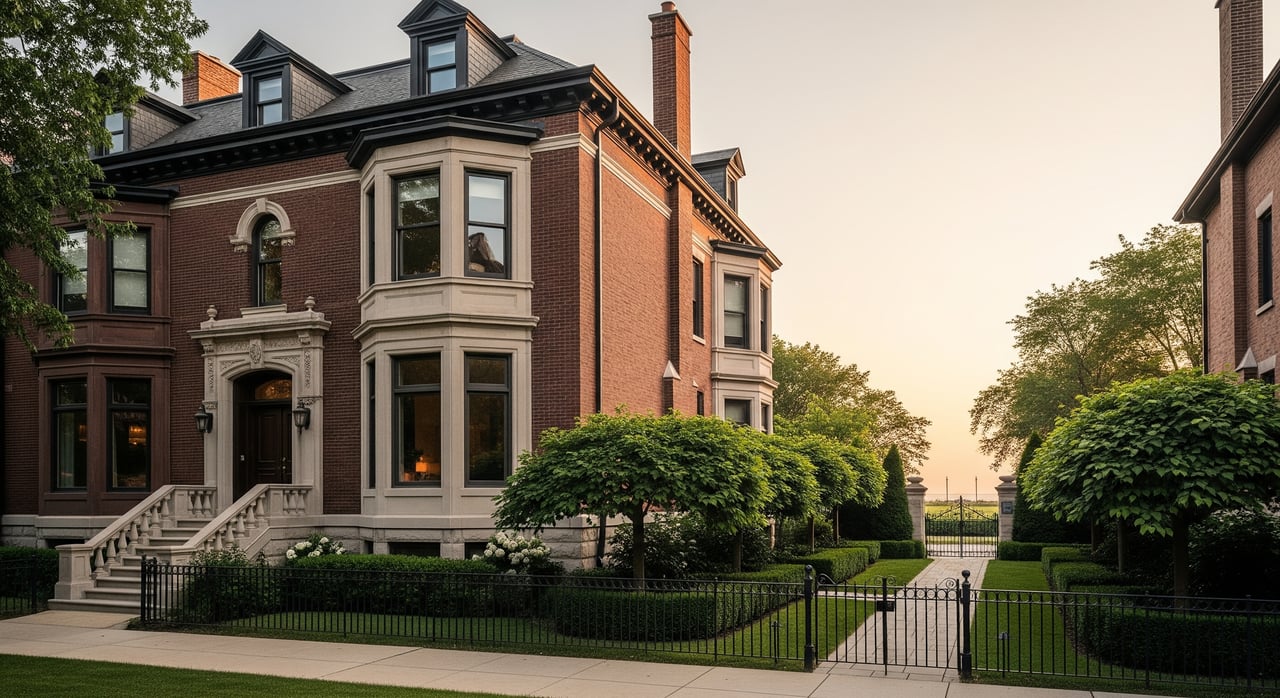
Does an extra five or ten feet of lot width in Lincoln Park really move your home’s value? If you’re weighing a classic 25-foot lot against a wider footprint, the stakes feel high because layout, parking, and resale potential all tie back to the land under your home. You want clear guidance that blends real market behavior with buildability realities. This guide breaks down how lot width shapes design options, construction costs, and pricing so you can make confident decisions. Let’s dive in.
Lot size patterns in Lincoln Park
Lincoln Park is a dense, historic neighborhood where 25-foot-wide lots are common. You see many narrow rowhouses, greystones, and townhomes on these standard-width parcels. Wider lots, including 30, 33, and 40-plus feet, appear where parcels were combined or along select blocks and corners.
Lot depth often runs about 100 to 125 feet, and combined or corner lots can create larger footprints with different setback dynamics. This mix of widths drives product types across the neighborhood. Narrow lots favor stacked, vertical layouts, while wider parcels support larger floorplates, more flexible plans, and easier parking solutions.
Buildability by lot width
Zoning and setbacks shape the envelope
Chicago’s zoning code and your specific zoning classification define how much of your lot you can build on. Side setbacks, maximum lot coverage, and height limits all matter. Alley access often controls garage and curb cut options. Landmark or historic protections, easements, and flood considerations can also limit exterior changes and buildable area. Always verify zoning, parcel lines, and permit history before you plan major work.
25-foot lots: what to expect
On a 25-foot lot, you typically work with a narrow floorplate that pushes you toward vertical circulation. Rooms are often arranged in line rather than side by side. Side windows can be limited by party walls, so light usually enters from the front and rear. On-site parking is generally a rear garage accessed from the alley, and adding a driveway on an interior lot is often challenging. Construction and staging can be more complex because buildings sit close together.
30 to 40-plus foot lots: what opens up
Wider parcels unlock more flexible plans. You can design side-by-side living and dining areas, create wider kitchens with islands, and improve natural light with more side elevation windows. Larger rear yards become feasible, and on-site parking gets easier to integrate. Multi-car garages or accessory units may be possible if zoning allows. The wider facade also gives you more architectural freedom.
Cost and construction impacts
Per-square-foot construction costs can trend higher on narrow historic lots. Workers have less space to stage materials, party-wall work adds complexity, and wide open spans can require pricier structural solutions. Expanding a narrow footprint often calls for steel or creative cantilevers that raise costs.
On wider lots, you may capture economies of scale as you add more livable area within an efficient envelope. If you consider variances or zoning relief to exceed bulk limits, factor in time and cost, and know that approvals are not guaranteed.
How width influences value
Appraisal treatment
Appraisers primarily rely on the Sales Comparison Approach in urban neighborhoods like Lincoln Park. Lot attributes are part of the adjustment set. Depending on the evidence, they may use a dollar-per-square-foot-of-land approach, percentage adjustments to the sale price, or feature-based adjustments such as “extra width,” “driveway/garage,” or “usable rear yard.” The goal is to reflect how the market assigns contributory value to width, not just raw land area.
Appraisers prefer paired sales within the immediate neighborhood. If the market consistently pays more for additional frontage, expect to see adjustments supported by those local comparables.
Buyer preferences in Lincoln Park
Buyers often pay a premium for wider lots that deliver better floorplan flow, more natural light, and convenient on-site parking. Larger rear yards and corner-lot frontage can also attract interest. That said, trade-offs matter. A beautifully updated home on a 25-foot lot can outperform a wider but outdated property. Developers tend to value width where redevelopment potential is strong. Scarcity plays a role too. In a dense neighborhood with many 25-foot parcels, wider lots feel special to some buyers, which can influence pricing.
A practical pricing framework
Define your micro-location
Treat each block like its own market. Lincoln Park value patterns change quickly from street to street. Keep your search tight to the subject block or the immediate block group.
Pick the right comps
Start with the same property type and a similar era. Keep gross living area within about 10 to 20 percent and match renovation level where you can.
- Primary group: comps with the same lot width, for example 25 feet. Use these as your control.
- Secondary group: slightly wider lots, for example 30 to 33 feet, on the same or adjacent blocks.
- Tertiary group: much wider or combined lots only if you need more data.
Apply market-supported adjustments
Adjust for location and parcel differences first. Then handle condition and updates, followed by interior size. After that, adjust functional items like parking and yard utility. Finally, isolate lot-specific attributes such as extra width or corner frontage. Support any width-related adjustment with paired sales or consistent trends. Document the rationale so you can defend the number.
Validate with simple checks
If you have enough recent sales, compare median price per finished square foot for 25-foot lots versus wider lots. Look at days on market for each group. When sample sizes allow, simple statistical checks can help illustrate the marginal contribution of lot width while controlling for size, parking, and renovation level. Use caution with small datasets and keep your analysis neighborhood-specific.
Seller playbook: highlight the right features
If you are selling a 25-foot lot
Lead with livability. Emphasize recent renovations, smart storage, and light optimization. Show how the floorplan lives well day to day. If expansion is possible, outline the path, including zoning steps and estimated costs, so buyers can see future potential. If parking is present, make it a headline feature. If not, quantify nearby solutions and focus on the home’s turnkey condition.
If you are selling a wider lot
Spotlight flexibility. Wider parcels deliver room for side-by-side spaces, better light, and future expansion potential if zoning allows. Detail garage capacity, driveway convenience, and yard usability. If you have a corner lot, call out the additional frontage and sunlight without overstating. When courting developers or value-add buyers, summarize the zoning, setbacks, and approximate buildable area so they can underwrite quickly.
Buyer checklist: weigh today vs tomorrow
Use this simple framework to evaluate options:
- Clarify your priority: move-in-ready now or expansion potential later.
- Map zoning, setbacks, and permitted uses for the parcel.
- Confirm alley access and whether curb cuts or driveways are allowed.
- Value on-site parking separately from width. Parking often carries its own premium.
- Evaluate rear-yard usability and orientation. Sun and privacy affect enjoyment.
- Review permit history and any landmark constraints that could impact exterior changes.
- Compare price per finished square foot across similar homes by lot-width group.
How to verify your lot details
Use official sources to confirm lot lines, width, and allowable uses before you price or plan improvements. The Cook County Assessor provides parcel dimensions and legal descriptions. The City of Chicago zoning map and Title 17 outline setbacks, coverage limits, and permitted uses. The City’s property information and GIS parcel viewer help you visualize lot boundaries and alley access. Your MLS data can anchor recent sales, lot widths, and renovation statuses.
Next steps in Lincoln Park
Lot width influences layout, parking, and long-term value, but it does not tell the whole story. In Lincoln Park, the right comp set and a clear read on zoning often make the difference between guessing and getting it right. If you want help selecting comps, pressure-testing renovation plans, or targeting buyers who value your lot’s strengths, connect with a local expert who blends luxury sales and investment know-how.
Ready to strategize your price and plan? Book a Market Strategy Call with Amanda Stapleton.
FAQs
How does a 25-foot lot affect design in Lincoln Park?
- Expect narrower floorplates, fewer side windows, and vertical circulation with most light from the front and rear, which favors efficient, stacked layouts.
Do wider lots usually sell for more in Lincoln Park?
- Often yes, because buyers value better floorplan flow, light, and on-site parking, but premiums vary by block, condition, and scarcity, so local comps are essential.
How do appraisers adjust for lot width in urban Chicago?
- They use paired sales and market-supported adjustments, sometimes as a percentage or as feature-based credits like extra width or garage, rather than land area alone.
What parking options differ by lot width?
- 25-foot interior lots typically rely on rear garages via the alley, while wider parcels more easily accommodate multi-car garages, driveways, or accessory units if zoning allows.
What should sellers on 25-foot lots emphasize?
- Highlight renovations, light, and livability; if expansion is feasible, present the zoning path and cost so buyers can see long-term potential alongside move-in readiness.
How should buyers compare 25-foot vs wider lots?
- Define whether you value turnkey living today or expansion tomorrow, then verify zoning, parking, and yard utility, and compare price per finished square foot across matched comps.
