
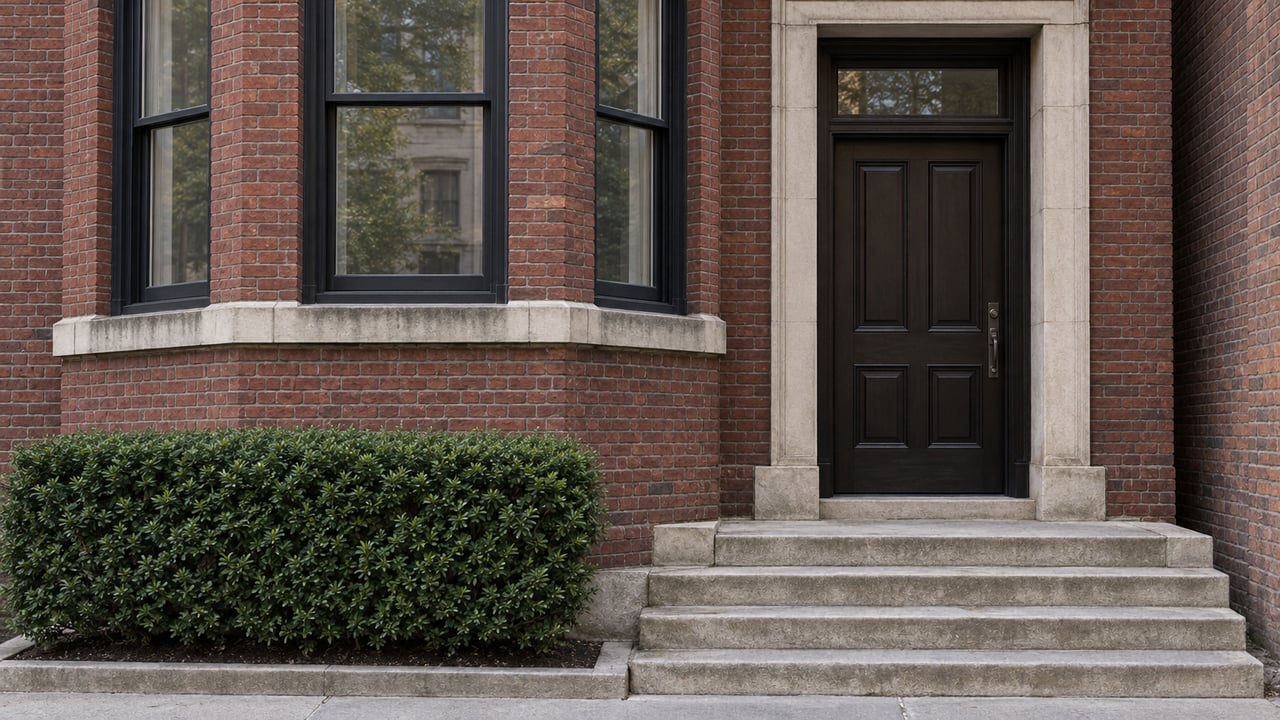
As Hoodline reported, on September 1, 2026, the city of Chicago issued a permit for a four-unit building at 950 West Willow Street in Lincoln Park. Five months earlier, an 1888 house had stood on that same lot for 138 years. Somewhere between those two dates, a plan to renovate turned into a plan to demolish, and the record of exactly how that happened sits in public permit filings and zoning committee minutes that any buyer of a pre-1940 Lincoln Park property should read before writing an offer.
The lot's paper trail runs deeper than one permit. In October 2025, then-owner Luka Pecic and applicant 3523 Bosworth LLC asked the city's Committee on Zoning, Landmarks and Building Standards to reclassify the property from RT-4 to RM-5, the higher-density zoning found throughout Lincoln Park, Lakeview, and Uptown. Their stated goal was renovation, not demolition, and the city granted an administrative adjustment that same month. Then, in January 2026, Landex Holding Company LLC bought the parcel for $750,000. The plan changed. Instead of renovating the existing units, Landex pursued full demolition and filed a replacement permit in March. Charles Schwartz is listed as architect of record on the new four-unit building, with Fargo Group LLC serving as general contractor. Brophy Excavation, the same firm that had filed the original demolition application under the previous owner back in October 2025, carried out the actual teardown this summer.
The 90 Days a Teardown Has to Survive
Chicago's Demolition-Delay Ordinance, on the books since 2003, exists for lots like this one. Any structure listed on the Chicago Historic Resources Survey triggers an automatic 90-day hold before the city will issue a teardown permit, giving the Department of Planning and Development a window to explore preservation options, according to Preservation Chicago. The 1888 house at Willow Street cleared that hold. So did an 1898 house that Hoodline reported was razed on Diversey Parkway this year. Neither survived past its hold period, but the hold itself is not paperwork a buyer can ignore. It is 90 days that a financing contingency, a construction loan draw schedule, and a contractor's start date all have to absorb, and it applies to any 19th or early 20th century structure on the survey regardless of whether the current owner plans to preserve it or replace it.
Alderman Timmy Knudsen, who represents the 43rd Ward and oversees zoning review across most of Lincoln Park, sits at the center of that tension between preservation timelines and the pace of infill redevelopment. The ward's zoning activity has stayed busy through 2026: in May, the city's zoning committee approved landmark designation for three additional Lincoln Park buildings, according to Block Club Chicago, adding to a list of protected structures that already extends well beyond the neighborhood's six historic districts.
The Same Age That Slows a Teardown Also Unlocks a Coach House
Chicago's citywide Accessory Dwelling Unit ordinance took effect April 1, 2026, replacing a five-zone pilot program that had covered roughly 12 percent of the city with a permanent rule reaching about 60 percent of it, according to Chicago Cityscape. Arete Renovators says the age requirement in the ordinance runs the opposite direction from the demolition hold: the existing building has to be at least 20 years old to add an ADU. A Lincoln Park house pushing past its 130th birthday clears that bar by a century.
A coach house is capped at 22 feet in height and limited to 60 percent of the property's required rear setback, which works out to roughly 450 square feet on a standard Chicago lot. Construction runs $200 to $400 per square foot for a new build and somewhat less for a garage conversion. Because the ordinance prohibits renting these units short term, a landlord's return depends on standard long-term leasing rather than nightly rates.
Landmark Districts in Lincoln Park
Lincoln Park's landmark districts include:
- Mid-North District
- Armitage-Halsted District
- Fremont Row House District
- Sheffield District
- Arlington-Deming District
- Old Town Triangle District
Assembly Service says properties in the Mid-North, Arlington-Deming, Sheffield, and Old Town Triangle districts require approval from the Commission on Chicago Landmarks. A buyer who confirms a lot sits outside the Historic Resources Survey but inside one of those four districts has cleared one hurdle, not both.
Why the Math Still Favors Demolition
Given all of that, the incentive to demolish rather than renovate or add a coach house still looks strong, and the current numbers explain why. Lincoln Park's single-family inventory dropped 51.2 percent year over year through mid-2026, and the median single-family sale price climbed 22.5 percent to $2.5 million over the same period, according to market data compiled through mid-2026. North Side Chicago overall hit a record median home price of $500,000 in the second quarter of 2026, with inventory down 22.8 percent to just 1,125 listings, according to Baird & Warner. Land in Lincoln Park is scarce enough, and a finished four-unit building sells for enough more than one renovated single-family home, that a 90-day hold reads as a rounding error against the spread between the two outcomes. The public record at 950 West Willow documents the change from renovation to demolition, but not what prompted it. The same economics also help explain why a coach house, capped at 450 square feet, will not compete with a four-unit teardown on total return, even though it clears every hurdle in a fraction of the time.
Before You Write an Offer on a Pre-1940 Lot
- Check whether the structure appears on the Chicago Historic Resources Survey. Chicago Cityscape's parcel lookup shows this alongside zoning and ADU eligibility for a specific address.
- Confirm whether the lot sits inside one of the six landmark districts above.
- Verify the zoning classification directly.
- Ask whether a zoning reclassification or administrative adjustment has already been filed on the parcel. The Willow Street history shows how quickly a filed renovation plan can become a demolition plan under new ownership.
- Build the 90-day hold into any financing contingency or construction timeline before assuming a teardown permit issues on the schedule a contractor first quotes.
A Few Questions Worth Settling Early
Does every pre-1940 Lincoln Park home face the 90-day hold? Only if it appears on the Chicago Historic Resources Survey. Age alone does not place a structure on the survey, so confirming the specific parcel's status matters more than counting decades.
Does adding an ADU affect property taxes? Cook County Assessor Fritz Kaegi's office has said ADU construction will not raise assessments on neighboring properties that do not add one.
I've walked buyers and sellers through this exact fork on Lincoln Park lots this year, comparing a teardown's return against a coach house's simpler timeline before either one goes on the market. If you're weighing that decision on a specific property, book a Market Strategy Call with Amanda Stapleton and we'll pull the zoning history and survey status on your parcel before you commit to a plan.
This article is general information, not legal, tax or financial advice. Consult a qualified professional about your situation.
