
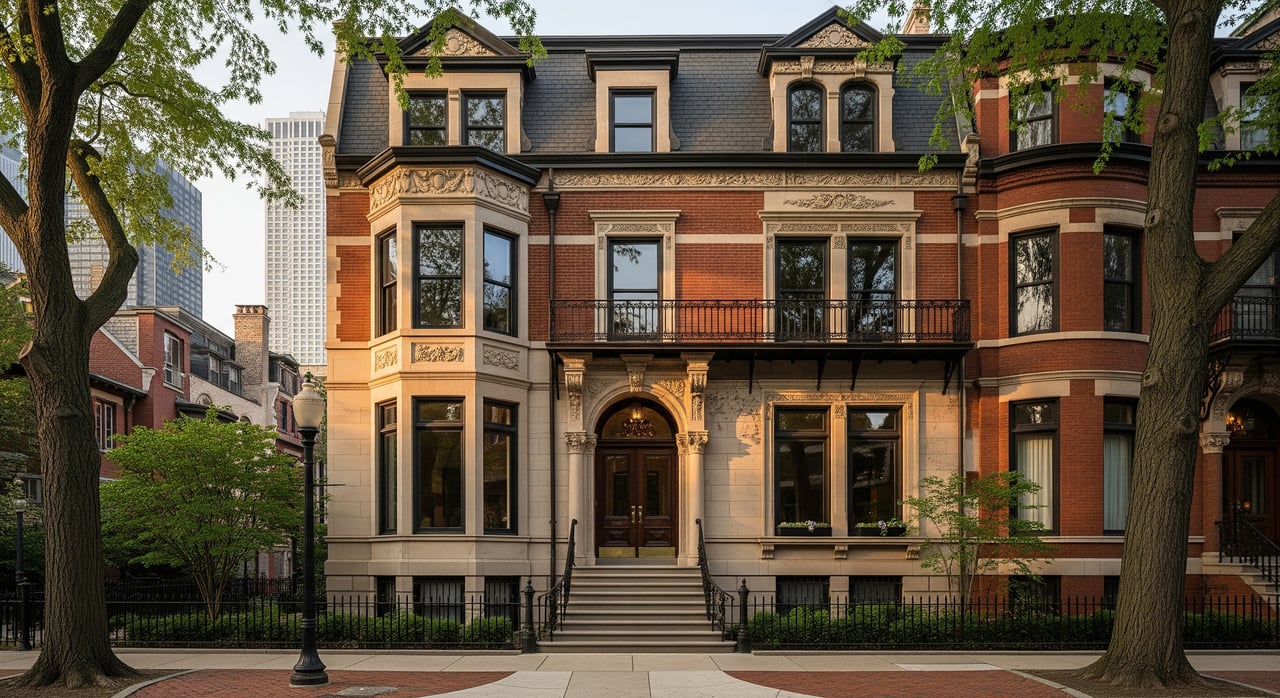
Considering a Gold Coast home with landmark status? You are likely drawn to the architectural beauty, tree-lined blocks, and the sense of legacy that defines this Chicago enclave. At the same time, you want clarity on what landmark rules actually mean for renovations, permitting, timelines, and resale. This guide explains how Chicago’s landmark system works in the Gold Coast, what kinds of changes trigger review, what to expect from approvals, and how to verify a property’s status before you make a move. Let’s dive in.
Landmark basics in Chicago
What a landmark district means
A landmark district is a defined area where many buildings collectively tell a historic or architectural story. Within the district, some buildings are labeled contributing and others non-contributing. The City’s focus is protecting what you see from the public way, which preserves the neighborhood’s character and streetscape. In the Gold Coast, coverage can vary block by block, so an exact address matters.
Individual landmarks vs. districts
An individual landmark is a single building designated for its specific significance. In a district, you follow guidelines that keep the area’s overall character intact. Both types can overlap in the Gold Coast, and each carries local review for exterior work that is visible from the street. If the interior is not specifically designated, interior changes are generally not regulated.
National Register vs. local designation
Federal recognition through the National Register of Historic Places is not the same as local landmark status. A National Register listing is an honor and can be important for tax incentive eligibility, but it does not impose the same local review rules as Chicago landmark designation. You can browse the National Register program on the National Park Service website for background and program details at the National Register of Historic Places overview.
What work triggers review
Exterior changes visible from the street
Chicago’s landmark review focuses on exterior work visible from streets, alleys, and parks. This includes facade repair, window and door changes on visible elevations, roofing, rooftop additions or decks, porches and stoops, masonry repointing when visible, signage, fences, and new construction on vacant lots. Any demolition or partial demolition of exterior walls faces rigorous review.
Interior work and landmark interiors
Interiors are regulated only when the interior has been officially designated. Otherwise, typical interior renovations are not subject to landmark review. If you are unsure, check the designation details for the specific property before planning a scope of work.
Common project scenarios
- Window replacements: Often allowed when profiles, muntin patterns, and finishes match the original where visible. Highly visible facades may limit options like full vinyl or aluminum-clad units.
- Rooftop additions: Possible when set back and designed to minimize street views. Expect careful design review on height, materials, and sightlines.
- Masonry repair: Mortar mixes and techniques must be appropriate for historic masonry. The wrong mortar can damage brick or stone over time.
- Demolition: Rare for contributing buildings. Even if a building is non-contributing, replacement construction must meet compatibility standards.
Compatibility, not imitation
New work does not have to copy the past to be approved. The key is compatibility with district character, which is evaluated through massing, scale, rhythm of openings, materials, color, and roofline. Quality contemporary design can fit well if it respects these principles. This approach allows thoughtful modernization without losing the neighborhood’s visual integrity.
Permits and approval timelines
How review fits into permitting
Landmark review is a distinct step and must be completed before the City issues building permits for regulated work. You will submit drawings and documentation for Landmarks staff review. If your project is routine or clearly appropriate, staff may approve it. Larger or more complex projects may go to the full Commission at a public meeting and require additional documentation.
Typical timeframes to plan for
- Staff-level approvals: About 2 to 6 weeks from a complete submission, depending on workload and clarity of your documents.
- Commission-level reviews: Often 6 to 12 or more weeks, since meetings are monthly and may require revisions or conditions.
- Complex projects: New construction, substantial additions, or demolition proposals can take several months of design review and iteration.
- Emergencies and maintenance: Document the condition and contact Landmarks staff promptly, since some in-kind emergency repairs can be expedited.
Practical planning tips
Start early, especially if your purchase or sale hinges on planned renovations. Build the review timeline into your closing strategy and contractor schedules. Hire an architect or contractor with Chicago landmark experience to reduce revisions and keep the process smooth. Ask for prior approvals and permit history to understand what has already been deemed acceptable at the property.
Costs, incentives, and value
Maintenance and materials
Historic-quality materials and skilled labor often cost more than standard replacements. Custom wood windows, period-appropriate metalwork, or specialized masonry can carry premiums. Insurance typically follows condition and replacement cost, and specialized restoration may influence those estimates.
Incentives for rehabilitation
Income-producing historic buildings may qualify for the federal 20 percent Historic Rehabilitation Tax Credit when the work meets program standards. Rules are administered by the National Park Service and IRS, and you should confirm specifics for your project. For background on the program and listings, review the National Register of Historic Places overview on the National Park Service site.
Assessments and taxes
Local landmark designation does not automatically change your property’s assessed value. Significant rehabilitation can influence assessments, so you should plan ahead for how improvements may be valued. You can review records and learn more on assessments at the Cook County Assessor website.
Resale dynamics in the Gold Coast
Historic designation often enhances neighborhood prestige and long-term desirability, which can support pricing in luxury markets. At the same time, ownership appeals most to buyers who embrace stewardship and are comfortable with design review. The buyer pool can be narrower, and renovation costs can be higher, but thoughtful restoration and documented approvals can help support valuations. Clear disclosure of designation and past approvals builds confidence with qualified buyers.
How to verify a property’s status
Step-by-step due diligence
- Confirm designation: Determine if the address is within a Chicago landmark district or is individually landmarked. Contact the Commission on Chicago Landmarks for official status and maps.
- Check contributing status: If it is in a district, find out if the property is contributing or non-contributing. This affects how strictly changes are reviewed.
- Review permit history: Request building-permit records and any past Landmarks approvals. Prior decisions show what has been allowed.
- Read staff reports and minutes: These explain the rationale behind approvals and common conditions.
- Engage the right team: If you plan work, consult a preservation architect or contractor experienced with Chicago landmarks to estimate scope, cost, and timeline.
- Explore incentives: For federal credits, review the National Register resources on the National Park Service site. For taxes and assessments, use the Cook County Assessor.
For general context on preservation’s economic impact, you can also explore resources from the National Trust for Historic Preservation.
Gold Coast buyer and seller playbook
If you are buying
- Confirm designation and contributing status before your attorney review period ends.
- Obtain prior permits and Landmarks decisions to understand precedents and conditions.
- Pre-brief a preservation architect to assess feasibility, cost ranges, and an approval path.
- Build 2 to 12 or more weeks of review into your renovation timeline, depending on scope.
- If the property is income-producing, evaluate potential eligibility for the federal 20 percent tax credit.
If you are selling
- Disclose designation status and known constraints clearly in your listing and disclosures.
- Gather documentation on past approvals and high-quality restoration work to support value.
- Prepare a renovation roadmap for likely buyer questions on windows, roof, and mechanicals.
- Plan your market timing with permit cycles in mind if you expect buyers to renovate.
Modern updates that work
Respect the streetscape
Successful Gold Coast renovations usually hide new bulk from street view and keep materials consistent with the block. Setback rooftop rooms that minimize visibility are a common solution. Window replacements that match original profiles on visible facades help preserve rhythm and proportion. On masonry, correct mortar mixes protect historic brick and stone, which also safeguards long-term value.
When you plan with compatibility in mind, you can achieve modern comfort while preserving the architectural presence that makes the neighborhood special.
Ready to explore landmark homes with a clear plan? You can get a tailored strategy for acquisition, design review, and resale positioning by connecting with Amanda Stapleton. Book a Market Strategy Call on Amanda Stapleton.
FAQs
Do Chicago landmark rules cover all Gold Coast homes?
- Not all Gold Coast properties are landmarked, and coverage varies by address; verify whether a specific property is in a district or individually designated before planning work.
What exterior changes on a landmarked Gold Coast home need approval?
- Any exterior work visible from the public way, including windows, facades, roofing, rooftop additions, porches, masonry, fences, signage, and new construction, generally requires review.
How long do Chicago landmark approvals take for Gold Coast projects?
- Straightforward, in-kind work can be approved by staff in about 2 to 6 weeks, while projects reviewed by the full Commission often take 6 to 12 or more weeks.
Can I demolish a building in a Gold Coast landmark district?
- Demolition of contributing buildings is difficult and often denied; non-contributing buildings may be replaced, but new construction must meet compatibility standards.
Do landmarked Gold Coast properties qualify for tax incentives?
- Income-producing historic buildings may be eligible for the federal 20 percent Historic Rehabilitation Tax Credit when the project meets program standards; confirm details for your case.
